

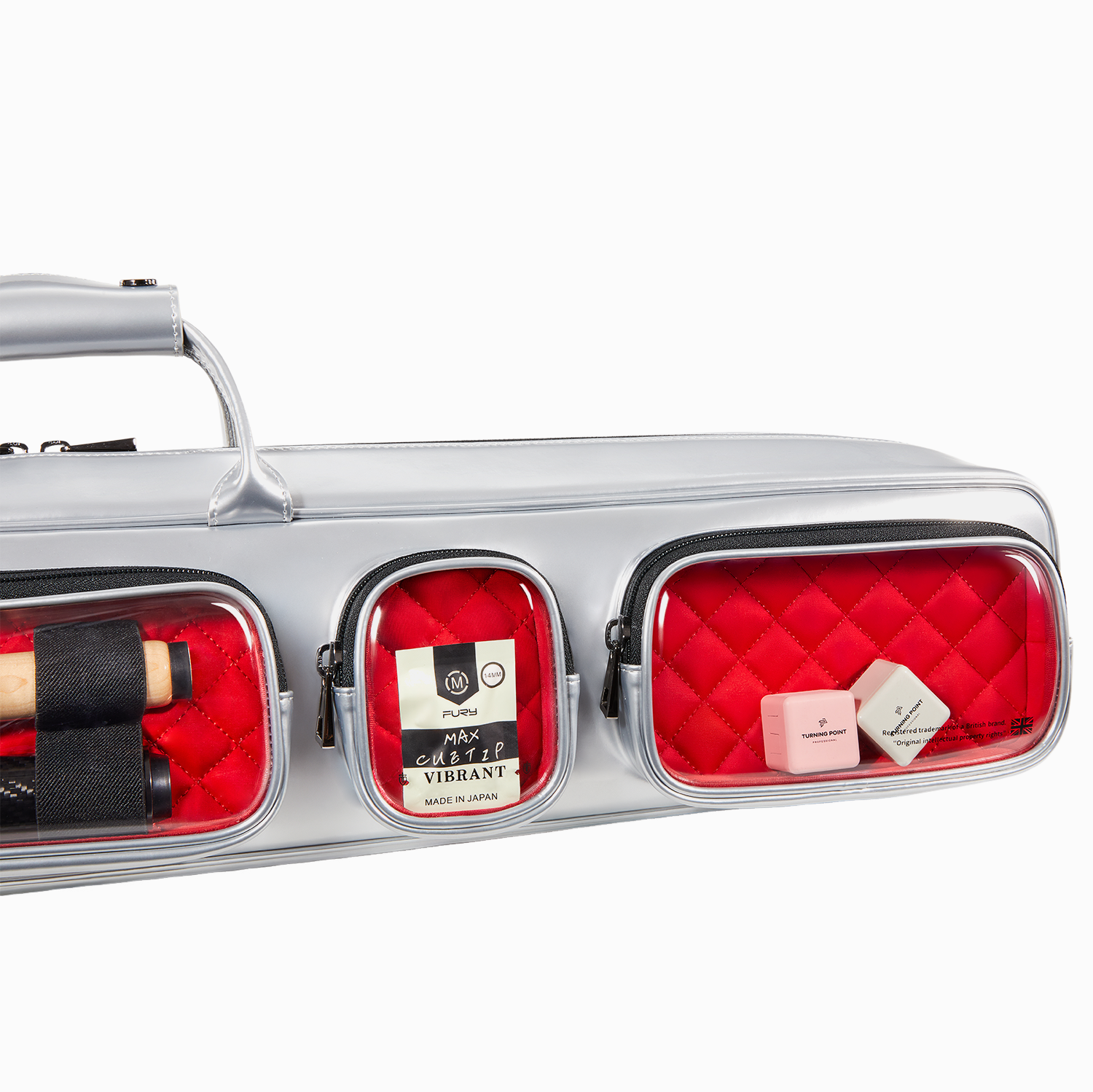
Choosing the best pool cue case is not simply about finding a bag that looks good. A quality pool cue case should protect your equipment, organize your cues, fit your playing style, and make transportation easier.
Whether you play casually at a local pool hall or compete in tournaments, the right pool cue case can make a significant difference in how you carry and protect your equipment.
What Makes a Good Pool Cue Case?
A good pool cue case should provide four essential things:
- Reliable cue protection
- Appropriate storage capacity
- Comfortable transportation
- A design that matches your needs
The best pool cue case for one player may not be the best choice for another.
A casual player carrying one playing cue may only need a compact case. A competitive player with a playing cue, break cue, jump cue, and spare shafts will usually need significantly more storage.
1. Choose the Right Cue Case Capacity
One of the most important things to consider is capacity.
Pool cue cases are commonly described using configurations such as 2B3S or 3B4S.
The first number generally refers to the number of cue butts, while the second refers to the number of shafts.
For example:
- 1B2S = 1 butt + 2 shafts
- 2B3S = 2 butts + 3 shafts
- 2B4S = 2 butts + 4 shafts
- 3B4S = 3 butts + 4 shafts
- 3B6S = 3 butts + 6 shafts
If you only carry one playing cue and one spare shaft, a compact configuration can be enough.
If you carry a break cue, jump cue, multiple shafts, and accessories, a larger configuration may be more practical.
LIZARD currently offers multiple configurations, including 2B3S, 3B4S and 3B6S cue cases.
2. Consider How You Transport Your Cue
Do you normally walk to your local pool hall?
Do you drive to tournaments?
Do you travel internationally with your equipment?
Your transportation habits should influence your choice.
A compact pool cue case can be convenient for everyday use, while a more structured case may provide additional protection when traveling.
For players who frequently move between clubs, tournaments and events, durability and organization become especially important.
3. Protection Matters
A pool cue is a precision piece of equipment.
Even small impacts, pressure, moisture or poor storage can create problems over time.
A quality cue case should keep the cue components separated and reduce unnecessary movement inside the case.
Padding, internal organization and structural construction are therefore more important than simply choosing a visually attractive design.
4. Think About Your Playing Style
Different players have different requirements.
Casual Players
If you play occasionally, a simple and lightweight pool cue case may be enough.
Regular Players
Players who visit a pool hall several times a week may benefit from better organization and stronger construction.
Tournament Players
Tournament players often carry several cue components and accessories.
A larger configuration such as a 3B4S or 3B6S can provide additional storage for a complete setup.
5. Choose a Design You Actually Like
A cue case does not have to look boring.
For many modern players, a cue case is also part of their personal style.
LIZARD’s collection includes colorful and distinctive designs such as the Rainbow, Holographic, Coco, Aegis and Scarab series.
The right case should protect your equipment while also fitting your personality.
Final Thoughts
The best pool cue case is the one that matches your equipment, playing frequency and transportation needs.
Before buying, ask yourself:
- How many cue butts do I carry?
- How many shafts do I need?
- Do I travel frequently?
- Do I need additional storage?
- Do I prefer lightweight or structured protection?
- What style fits me?
Once you know these answers, choosing the right cue case becomes much easier.
Internal links: https://lizardcuecase.com/products/lizard-diamond-series-cue-case-2b3s?_pos=1&_psq=2B3S&_psid=88b8b7a9e&_ss=e
共有する:
Leather Pool Cue Case: How to Choose the Right Leather Cue Case
Best Pool Cue Case for 2026: How to Choose the Right Case for Your Game