

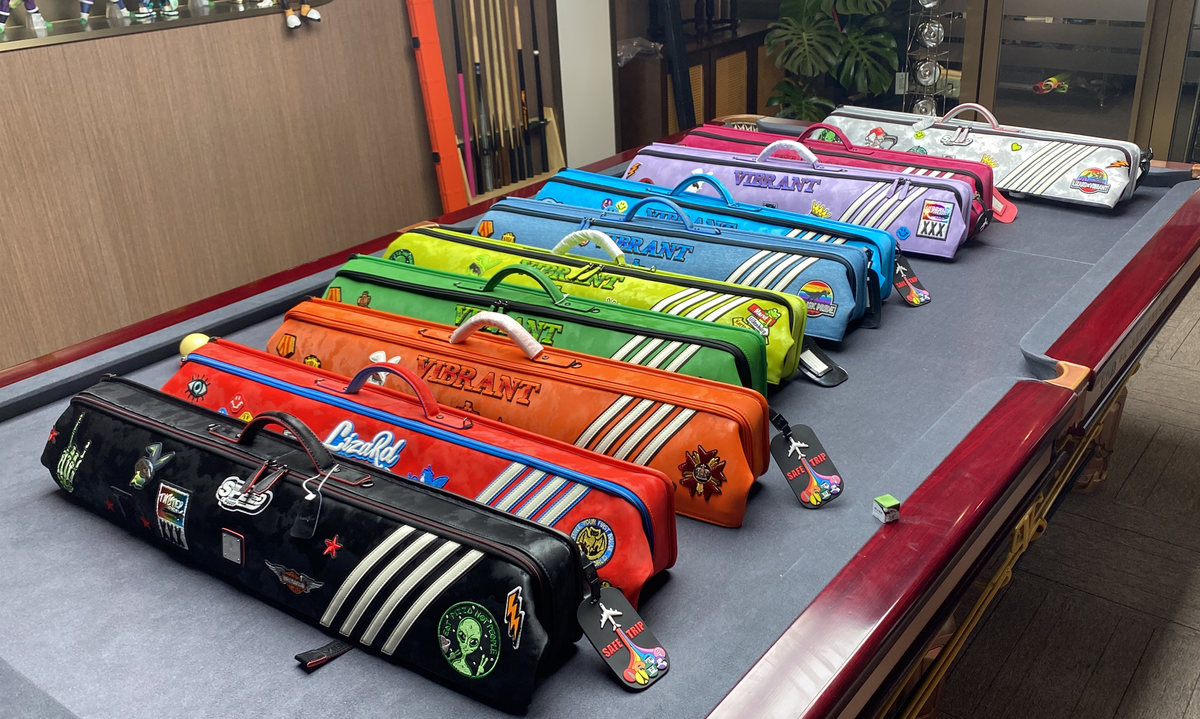
Choosing a pool cue case is not only about appearance.
The right case should protect your cues, keep your equipment organized, fit your playing setup, and be comfortable enough to carry wherever you play.
One of the first decisions many players face is simple:
Should you choose a hard pool cue case or a soft pool cue case?
Both styles have advantages. The better option depends on how often you play, how you travel, how much equipment you carry, and how much protection your cues need.
In this guide, we’ll compare hard and soft pool cue cases and help you determine which type makes sense for your game.
⸻
Hard vs Soft Pool Cue Case: What’s the Difference?
The biggest difference is structural design.
A hard pool cue case uses a more rigid outer structure designed to resist external pressure and impact.
A soft pool cue case is generally more flexible and lightweight, often using padding and reinforced materials to protect the cues inside.
Neither type is automatically the right choice for every player.
Instead, think about where and how you use your cue.
|
Feature |
Hard Pool Cue Case |
Soft Pool Cue Case |
|
Protection |
High structural protection |
Padded protection |
|
Weight |
Usually heavier |
Usually lighter |
|
Flexibility |
Lower |
Higher |
|
Portability |
Moderate |
High |
|
Travel |
Excellent for demanding travel |
Good for everyday travel |
|
Local league play |
Suitable |
Very convenient |
|
Multiple cues |
Excellent |
Depends on design |
|
Storage |
Structured |
Flexible |
|
Best for |
Frequent travelers & serious players |
Everyday and local players |
The important question is not which one is universally better.
The question is:
Which type matches your playing routine?
⸻
1. Hard Pool Cue Case: Maximum Structural Protection
A hard pool cue case is designed for players who place a high priority on structural protection.
The rigid construction can help protect the cues from pressure and accidental impacts during transportation.
This can be particularly useful if you regularly carry expensive playing cues, break cues, jump cues, or multiple shafts.
A hard cue case may be a good choice if you:
- Travel frequently with your cues
- Attend tournaments
- Carry several cues or shafts
- Own expensive or custom cues
- Transport your equipment in crowded environments
- Want stronger structural protection
- Prefer a more rigid case
For tournament players, the additional structure can provide peace of mind when the cue case is being moved between locations.
However, there is a trade-off.
A hard case can be heavier and less flexible than a soft case.
If you walk long distances to your local pool hall every week, weight may become an important consideration.
⸻
2. Soft Pool Cue Case: Lightweight and Convenient
Soft pool cue cases are generally designed around portability.
They are usually easier to carry and can be convenient for players who mainly travel short distances.
A well-designed soft case can still provide padding, internal compartments, reinforced construction, and organized storage.
A soft pool cue case may be suitable if you:
- Play at a local pool hall
- Attend weekly league nights
- Drive short distances with your cue
- Prefer a lightweight case
- Carry a relatively compact setup
- Value mobility and convenience
For casual and regular players, there may be little reason to carry a large rigid case if the equipment is mostly transported between home and a nearby pool hall.
The goal is to choose enough protection without carrying unnecessary weight.
⸻
3. Which Is Better for Traveling?
Travel is one of the biggest reasons players consider a hard cue case.
If you frequently travel long distances, attend tournaments, or transport valuable cues, structural protection becomes increasingly important.
A hard pool cue case can provide a rigid barrier around the equipment.
However, travel does not automatically mean you need the largest or heaviest case available.
You should also consider:
- Number of cue butts
- Number of shafts
- Case dimensions
- Weight
- Carrying strap
- Handle design
- Accessory storage
- Internal organization
For air travel or other demanding transportation situations, players should also consider how the case will be handled and whether additional external protection is appropriate.
A cue case protects your equipment, but it should not be treated as a substitute for careful packing.
⸻
4. What About League and Tournament Players?
Your playing level can also influence the type of cue case you choose.
Local League Players
A league player may prioritize:
Light weight + easy carrying + sufficient storage
A 2x4 pool cue case can be a practical configuration for players carrying a playing cue, break cue, and additional shafts.
Tournament Players
Tournament players often carry more equipment.
A setup may include:
- Playing cue
- Break cue
- Jump cue
- Multiple shafts
- Extension
- Chalk
- Gloves
- Tip tools
- Joint protectors
In this situation, a 3x4 or 3B4S pool cue case may provide additional capacity.
A hard case may also be attractive if the player frequently travels between tournaments.
The key is to match case capacity with actual equipment rather than simply choosing the largest case available.
⸻
5. Does Material Matter?
Yes.
The outer material affects the appearance, weight, durability, maintenance, and overall feel of a cue case.
Leather pool cue cases, for example, are popular among players who want a traditional or premium appearance.
Other modern materials may provide different combinations of durability, weight, texture, and visual design.
But the exterior material is only one part of the equation.
When comparing pool cue cases, also look at:
Interior Protection
The inside of the case should keep cue butts and shafts separated and secure.
Padding
Adequate padding can help reduce unnecessary movement and contact during transportation.
Structural Design
The case should hold its shape and keep the equipment organized.
Hardware
Zippers, buckles, handles, straps, and attachment points can affect everyday usability.
Organization
Additional pockets can be useful for chalk, gloves, extensions, joint protectors, and other accessories.
A beautiful exterior does not automatically mean a well-designed cue case.
⸻
6. How Much Capacity Do You Actually Need?
Before buying a pool cue case, count your equipment.
Start with three questions:
How many cue butts do I carry?
How many shafts do I carry?
Do I carry a break or jump cue?
Here is a simple guide:
1B2S
Suitable for a compact setup with one cue butt and two shafts.
2x4
A practical option for players carrying two cue butts and multiple shafts.
3x4 / 3B4S
Designed for players who need space for three cue butts and four shafts.
This can work well for a playing cue, break cue, jump cue, and multiple shafts.
Larger Cases
Players with larger collections or more equipment may prefer higher-capacity configurations.
More capacity is not automatically better.
If you rarely use the additional space, a larger case can simply add unnecessary weight and bulk.
⸻
7. Hard vs Soft Pool Cue Case: Which One Is Right for You?
Use this simple checklist.
Choose a Hard Pool Cue Case if:
- Protection is your highest priority
- You frequently travel
- You participate in tournaments
- You carry expensive cues
- You carry multiple cues
- You want stronger structural resistance
Choose a Soft Pool Cue Case if:
- You mainly play locally
- You want a lighter case
- You frequently walk or commute with your cue
- You carry a compact setup
- Portability is more important than maximum structure
Consider a Leather Pool Cue Case if:
- Appearance matters to you
- You prefer a classic or premium look
- You want your cue case to reflect your personal style
- You are looking for a case that combines functionality with distinctive design
The right choice ultimately depends on your equipment and playing habits.
⸻
8. Don’t Buy More Case Than You Need
One common mistake is assuming that a larger or more expensive pool cue case must be better.
That’s not necessarily true.
A player who carries one playing cue and one shaft does not necessarily need a large 3B6S case.
Likewise, a tournament player carrying a playing cue, break cue, jump cue, and multiple shafts may quickly outgrow a compact case.
Think about your current setup and realistic future needs.
A good pool cue case should provide:
Enough protection + enough capacity + comfortable transportation.
That is a better buying strategy than simply choosing the biggest case available.
⸻
9. Quick Buying Guide
If you are still unsure, use this simple decision process:
Casual Player
Choose a compact and lightweight case.
League Player
Consider a 2x4 configuration if you carry a playing cue, break cue, and extra shafts.
Tournament Player
Consider a 3x4 / 3B4S configuration if you regularly carry multiple cues and shafts.
Frequent Traveler
Prioritize structural protection, secure storage, carrying comfort, and appropriate capacity.
Cue Collector
Consider a higher-capacity case with organized compartments and stronger protection.
Style-Focused Player
Look for premium materials, distinctive finishes, and a design that fits your personal style.
⸻
Final Thoughts
There is no single pool cue case that is perfect for every player.
A hard pool cue case can make sense when structural protection and frequent travel are priorities.
A soft pool cue case can be a practical choice when lightweight transportation and everyday convenience matter more.
The most important factors are:
- How many cues do you carry?
- How many shafts do you need?
- How often do you travel?
- How much protection does your equipment require?
- How much weight are you comfortable carrying?
Once you answer these questions, choosing between hard and soft construction becomes much easier.
And if your equipment setup changes over time, your cue case should be able to accommodate the way your game evolves.
Protect your cues. Organize your equipment. Carry what you actually need.
Explore the LIZARD pool cue case collection and find a configuration that fits your game.
Share:
Leather Pool Cue Case: What to Look for Before You Buy
2B3S vs 2B4S vs 3B4S Pool Cue Case: Which Size Do You Need?