

A pool cue is more than just another piece of billiards equipment. For many players, a cue is a carefully selected piece of gear that can cost hundreds or even thousands of dollars.
So why protect it with an ordinary bag?
Choosing the best pool cue case depends on more than appearance. You need to consider capacity, protection, materials, portability, storage space, and how often you travel with your equipment.
Whether you are a league player, tournament competitor, casual player, or cue collector, this guide will help you find the right pool cue case for your setup.
What Makes a Good Pool Cue Case?
The best pool cue case should do four things well:
- Protect your cue during transportation.
- Keep butts and shafts organized.
- Give you enough room for your current equipment.
- Match the way you actually play.
A case that looks great but does not fit your equipment is frustrating. A case with excessive capacity may simply add unnecessary weight.
The goal is to find the right balance.
1. Choose the Right Cue Case Capacity
One of the first things you will notice when shopping for a cue case is terminology such as 2B4S or 3B4S.
These numbers describe the number of cue butts and shafts the case can hold.
1B2S
A 1 butt × 2 shafts case is a compact option for players who primarily use one cue but want an additional shaft.
It is ideal for:
- Casual players
- Practice sessions
- Minimalist setups
- Players who prefer lightweight equipment
2B4S
A 2 butt × 4 shafts case is one of the most versatile configurations for serious pool players.
It gives you space for:
- Playing cue
- Break cue
- Spare shafts
- Additional shaft or equipment
If you regularly play league matches or tournaments, a 2×4 configuration can be a practical long-term choice.
3B4S
Players who carry multiple cues or additional equipment may prefer a 3 butt × 4 shafts configuration.
This provides additional flexibility without moving into the largest cue cases.
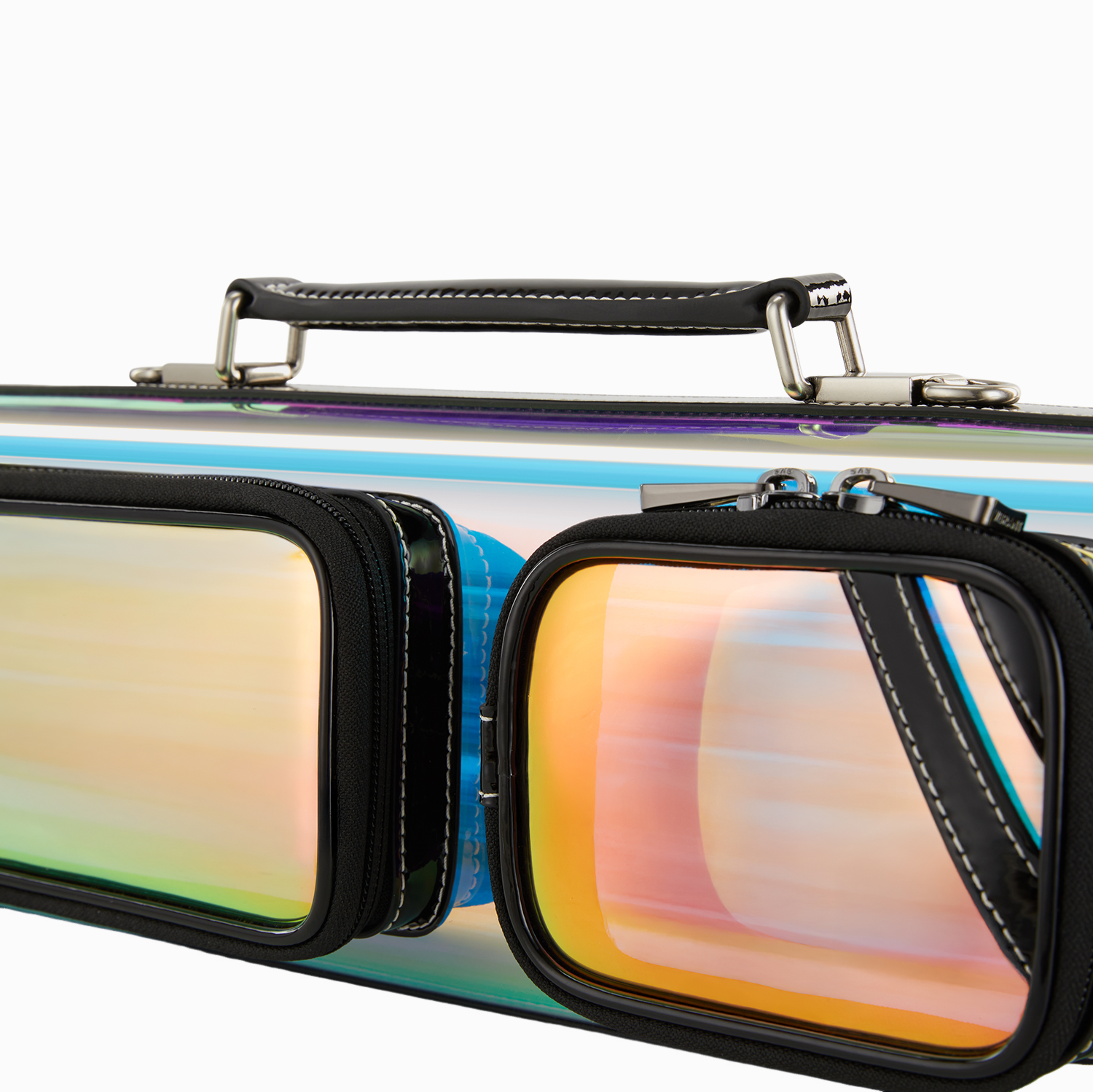
LIZARD offers multiple 3B4S designs, including the Rainbow, Horizon, Holographic, Multi-bag Function and other series.
[Shop 3B4S Pool Cue Cases]
2. Hard Cue Case or Soft Cue Case?
The next major decision is whether you need a hard or soft pool cue case.
Hard Pool Cue Cases
A hard case provides a more rigid structure and is designed for players who prioritize additional protection during transportation.
A hard cue case may be a better choice if you:
- Travel frequently
- Transport expensive cues
- Fly with your equipment
- Attend tournaments regularly
- Carry your cue in environments where it may be knocked around
Soft Pool Cue Cases
Soft cases are generally lighter and more flexible.
They are convenient for:
- Local league nights
- Practice sessions
- Everyday transportation
- Players who walk or commute with their equipment
Neither option is automatically better.
The best choice depends on how you use your cue.
3. Is a Leather Pool Cue Case Worth It?
For players who care about both protection and appearance, a leather pool cue case can be an attractive upgrade.
Leather offers a distinctive look and can develop character over time. Premium cue cases may also combine leather with structured interiors, padding and other materials to create a balance between style and protection.
But leather should not be the only factor you consider.
Before purchasing a leather cue case, check:
- Internal capacity
- Shaft protection
- Padding
- Weight
- Shoulder strap
- Accessory storage
- Construction quality
- Return and shipping policies
The goal is not simply to buy a leather case.
It is to buy a case that fits your equipment and playing habits.
4. What Is the Best Pool Cue Case for Travel?
If you frequently travel between pool halls, tournaments or cities, portability becomes much more important.
Look for:
- Strong construction
- Secure closures
- Comfortable shoulder straps
- Separate cue compartments
- Accessory storage
- Reasonable weight
- Reliable internal protection
A good travel cue case should make transportation easier rather than turning your equipment into another burden.
For players carrying multiple cues and shafts, configurations such as 2B4S and 3B4S provide useful flexibility.
5. Don’t Buy More Capacity Than You Need
More capacity does not automatically mean a better cue case.
If you normally carry one playing cue and one shaft, a huge tournament case may be unnecessary.
On the other hand, if you already own a playing cue, break cue, jump cue and several shafts, buying a small case today may force you to upgrade again later.
Think about your equipment one or two years from now.
If you expect your setup to grow, buying a slightly larger case can be more economical.
6. A Cue Case Should Also Match Your Style
Pool equipment does not have to look generic.
For many players, a cue case is part of their identity.
That is why LIZARD offers cue cases in different visual styles rather than relying exclusively on traditional black cases.
The Rainbow Series, for example, combines a 3B4S configuration with a colorful sticker-inspired design, cowhide and microfiber construction, and an adjustable shoulder strap.
It is designed for players who want their equipment to stand out as well as protect their cues.
[Explore the LIZARD Rainbow Series]
7. How Much Should You Spend on a Pool Cue Case?
There is no universal price that makes a cue case “good.”
Instead, compare the price with the value of the equipment you are protecting and how frequently you use it.
For occasional players, a basic cue case may be enough.
For league players and serious enthusiasts, investing in better construction, capacity and organization can make sense.
For collectors and tournament players, premium materials, craftsmanship, larger capacity and customization may justify a higher price.
LIZARD currently offers cue cases across several price levels, from more accessible designs to premium handcrafted-style collections.
This means you can choose according to your equipment, budget and playing style rather than buying the most expensive case available.
Which Pool Cue Case Should You Buy?
Use this simple checklist:
Casual player:
Choose a compact 1B2S or similar configuration.
League player:
Consider a 2B4S or 3B4S case.
Tournament player:
Prioritize protection, capacity and portability.
Frequent traveler:
Look for strong construction, secure storage and comfortable carrying options.
Cue collector:
Choose a higher-capacity premium case with better organization.
Style-focused player:
Look for distinctive materials, colors and designs.
Final Thoughts
The best pool cue case is not necessarily the most expensive one.
It is the case that protects your equipment, fits your setup, travels comfortably and matches the way you play.
Before buying, start with three questions:
How many cues do I carry?
How often do I travel?
How much protection does my equipment need?
Once you answer those questions, choosing between 1×2, 2×4, 3×4, hard, soft, leather or premium cue cases becomes much easier.
If you are looking for a pool cue case that combines protection, functionality and distinctive design, explore the LIZARD collection and find the configuration that fits your game.
Share:
How to Choose the Best Pool Cue Case for Your Playing Style
3B4S Pool Cue Case: Is It the Right Size for Your Cues?